Connected and Consuming: The Hidden Power Architecture Keeping Your Smart Home Awake Around the Clock
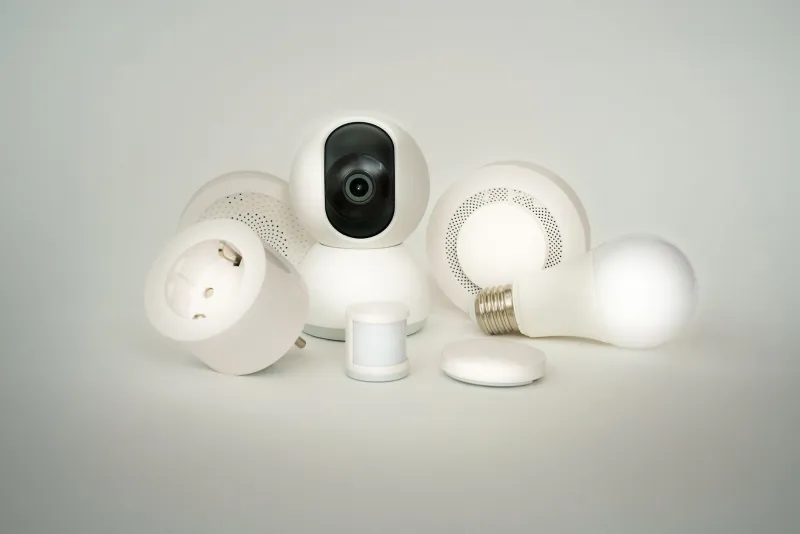
The promise of the smart home is compelling: lights that anticipate your arrival, thermostats that learn your schedule, security cameras that send alerts before you think to check them. What the marketing materials rarely quantify is the electrical infrastructure required to sustain that responsiveness twenty-four hours a day. Every device in a modern connected household maintains some degree of operational readiness, and that readiness is not free. The cumulative effect, spread across a typical American home containing anywhere from fifteen to fifty networked devices, represents a persistent and largely invisible drain on the monthly utility bill.
This is not merely a restatement of the well-understood standby power problem. The architecture of IoT devices introduces consumption patterns that are fundamentally different from the passive transformer losses that characterized the previous generation of consumer electronics. To understand why, it helps to examine what these devices are actually doing when a user believes they are off.
The Difference Between Off and Idle
A traditional incandescent lamp presented a binary electrical state: current flowed or it did not. A smart bulb, by contrast, must remain addressable at all times. To receive a command from a smartphone application or a voice assistant hub, the bulb's wireless radio cannot be fully de-energized. The microcontroller managing that radio must continue executing a polling or listening routine. The result is a device that occupies a persistent low-power operational state rather than a true off condition.
This architectural requirement is not a design flaw. It is an intentional engineering decision made to satisfy the user experience expectation of near-instantaneous response. The tradeoff is a baseline consumption figure that typically ranges from 0.3 watts to 2.5 watts per device, depending on the wireless protocol employed and the aggressiveness of the power management firmware. Individually, these figures appear negligible. Aggregated across an entire ecosystem, they become significant.
Consider a household with twelve smart bulbs, four smart plugs, two voice assistant speakers, a smart thermostat, a video doorbell, three indoor security cameras, and a smart lock. A conservative average of 1.2 watts per device yields a continuous draw of approximately 28.8 watts. Over the course of a year, that figure translates to roughly 252 kilowatt-hours of consumption attributable solely to the connected infrastructure of the home, independent of any active use. At the national average residential electricity rate of approximately 16 cents per kilowatt-hour, that represents more than forty dollars annually in phantom expenditure.
Protocol Choices and Their Power Consequences
The wireless communication standard a device employs has a direct and measurable influence on its idle consumption profile. Wi-Fi-connected devices carry the highest baseline draw because maintaining an active association with a 2.4 GHz or 5 GHz network requires continuous radio operation and periodic keep-alive packet transmission. A typical Wi-Fi smart plug, even when its controlled outlet is switched off, may consume between 1.5 and 3 watts to sustain its network presence.
Zigbee and Z-Wave devices operate more efficiently in this regard. Both protocols were designed with mesh networking and low-power operation as primary constraints, and their sleep-cycle architectures reflect that priority. A Zigbee end device can reduce its radio to a dormant state between polling intervals, waking for milliseconds at a time to check for pending commands. This approach yields idle consumption figures that often fall below 0.5 watts.
Thread and Matter-over-Thread represent the current frontier of power-conscious IoT protocol design. By enabling devices to participate in a mesh without maintaining continuous radio activity, Thread allows for duty cycles that significantly reduce average consumption. However, the installed base of Thread-compatible devices in American homes remains relatively limited as of this writing, and the efficiency benefits apply primarily to battery-operated endpoints rather than mains-powered fixtures.
Bluetooth Low Energy occupies a specialized position in this landscape. Its extremely low duty cycle makes it well-suited for sensors and wearables, but its limited range and the requirement for a local hub or gateway introduce their own consumption considerations at the system level.
What Standard Measurements Miss
The challenge facing any homeowner attempting to audit their smart home's power consumption is one of measurement granularity and timing. A standard smart plug with energy monitoring capability will accurately report the average power draw of a single device over an extended interval. What it cannot easily reveal is the dynamic consumption profile that characterizes IoT devices: brief spikes during wireless transmission, elevated draw during firmware update processes, and the periodic wake cycles that some devices execute on schedules entirely opaque to the user.
More sophisticated measurement requires instrumentation capable of capturing power waveforms at sufficient temporal resolution to distinguish these transient events. An oscilloscope equipped with a current probe, or a dedicated power analyzer such as those produced by Yokogawa or Rohde & Schwarz, can reveal consumption behaviors that a simple watt-hour meter averages into invisibility. For the technically inclined homeowner, a data-logging energy monitor deployed at the circuit breaker panel level can capture aggregate consumption curves that expose the overnight behavior of an entire room's device ecosystem.
Network traffic analysis provides a complementary diagnostic approach. A home router with logging enabled, or a dedicated network tap, can reveal which devices are transmitting data during overnight hours, offering indirect evidence of elevated radio activity and the associated power draw. Devices that generate unexpected network traffic at three in the morning are, by definition, not dormant.
The Firmware Variable
One underappreciated dimension of this problem is the degree to which manufacturer firmware decisions influence consumption independent of hardware capability. A device whose silicon is capable of aggressive sleep cycling may be shipped with firmware that keeps it in a higher-power polling state to improve response latency metrics, which in turn improves user satisfaction scores in product reviews. The consumer has no visibility into this tradeoff and no practical mechanism to alter it without third-party firmware, which introduces its own complexity and support implications.
The open-source firmware ecosystem, including projects such as Tasmota and ESPHome, has demonstrated that many popular ESP32 and ESP8266-based smart home devices can achieve meaningfully lower idle consumption when operated with community-developed firmware that prioritizes sleep efficiency. This represents a legitimate pathway for technically capable users, though it falls well outside the experience of the average homeowner.
Practical Steps for the Engaged Consumer
For those unwilling to reflash firmware but motivated to reduce phantom consumption, several practical interventions remain accessible. Deploying smart power strips that cut power to associated outlets when a primary device enters standby eliminates the idle draw of entire device clusters at the cost of the response-time convenience those devices were purchased to provide. Scheduling automations that power down non-essential devices during overnight hours through the home automation platform itself is a less disruptive compromise.
At the procurement stage, examining the standby power figures published in FCC filing documentation or Energy Star certification data provides a more reliable basis for comparison than marketing specifications. The Energy Star program's connected devices certification standard imposes standby consumption limits that, while not stringent by engineering standards, at least establish a floor below which certified products must perform.
The broader implication is that the smart home, as currently architected, is a system optimized for responsiveness rather than efficiency. For consumers and engineers alike, understanding the power economics embedded in that architectural choice is prerequisite to making informed decisions about which conveniences are worth their electrical cost.