Cheaper Than They Should Be: The Growing Threat of Counterfeit Passive Components in Modern Electronics
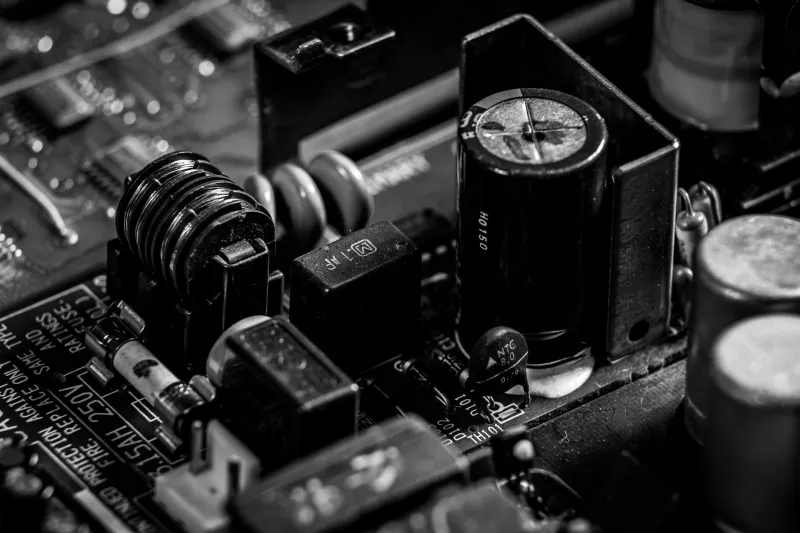
The electronics industry has spent considerable effort hardening itself against counterfeit integrated circuits. Authentication markings, supply chain audits, and X-ray inspection have become standard weapons against fake microcontrollers and processors. Yet while engineers focus their scrutiny on silicon, a quieter and arguably more insidious problem has taken root in the passive component segment. Counterfeit resistors, capacitors, and inductors are entering supply chains at a rate that many procurement professionals are only beginning to acknowledge—and the consequences for product reliability can be severe.
The assumption underlying most quality assurance frameworks is straightforward: passives are simple. A resistor is a resistor. A ceramic capacitor contains no proprietary geometry, no firmware, no complex process node. If it measures within tolerance on the bench, the thinking goes, it must be genuine. That assumption is precisely what counterfeiters are exploiting.
Why Passives Have Become a Target
Counterfeit active components—microprocessors, FPGAs, memory chips—carry substantial risk for the forger. Sophisticated die markings, complex electrical behavior, and a community of engineers trained to scrutinize them make successful deception difficult. Passive components present a far more attractive opportunity. Their electrical specifications are limited and relatively easy to approximate under controlled test conditions. Their markings are minimal. Their unit prices are low enough that buyers rarely invest in rigorous incoming inspection.
That last point drives the economics of the fraud. A counterfeit MOSFET that fails incoming inspection represents a meaningful loss for the fraudulent supplier. A counterfeit 0402 resistor that passes a quick resistance measurement—even if its temperature coefficient, noise characteristics, or power rating are wildly off-spec—can be shipped in volume with little risk of detection at the point of sale. The margin on ten thousand counterfeit capacitors can be substantial when the cost of production is a fraction of the authentic component.
The problem intensified during and after the component shortages of 2020 through 2022. When legitimate supply chains ran dry, buyers turned to independent distributors and spot market brokers. Those channels, while sometimes legitimate, are also the primary entry points for counterfeit goods. Passive components flooded the spot market during that period, and a meaningful fraction of what entered US-based supply chains has never been properly screened.
What Counterfeit Passives Actually Look Like
Counterfeit passive components fall into several distinct categories, each presenting different detection challenges.
The most common type is the remarked component. A manufacturer produces a part that meets a lower-grade specification—perhaps a capacitor rated for 16V—and relabels it as a higher-rated 50V component. Under normal operating conditions, the part may function without issue. Under stress, or in an application where the full rating is exercised, failure follows.
A second category involves out-of-tolerance parts that have been sorted and relabeled. Resistors that measure 5% tolerance are packaged and sold as 1% precision components. The electrical value may be correct; the precision is not. In feedback networks, filter circuits, or any design where component matching matters, these substitutions introduce errors that may not surface until the product is in the field.
A third and more dangerous category is the wholly fraudulent component—a part that is constructed with inferior materials, inadequate dielectric formulations, or substandard wire bonding in the case of inductors. These components may measure correctly at room temperature under light load, but degrade rapidly under thermal cycling, humidity exposure, or sustained current. They are the hardest to catch and the most likely to cause latent field failures.
The Test Gap Counterfeiters Exploit
Standard incoming inspection for passive components typically involves spot-checking resistance, capacitance, or inductance with a bench LCR meter. This approach catches gross failures—a 10kΩ resistor that measures 100Ω, for instance—but misses the subtler forms of fraud almost entirely.
Temperature coefficient of resistance (TCR) is rarely measured during incoming inspection. A forger who substitutes a carbon composition element for a metal film construction can produce a resistor that measures correctly at 25°C but drifts dramatically at elevated temperatures. Voltage coefficient of capacitance (VCC) in ceramic capacitors—the phenomenon by which capacitance drops significantly under applied DC bias—is similarly ignored in most receiving inspection protocols. A Class II ceramic capacitor substituted for a Class I part may measure identically on an unbiased LCR meter while behaving entirely differently in circuit.
Equivalent series resistance (ESR) and dissipation factor are more revealing tests, particularly for capacitors. Counterfeit electrolytic capacitors, a historically common fraud target, frequently exhibit elevated ESR that betrays inferior electrolyte formulations. Yet ESR measurement requires slightly more sophisticated test equipment than a basic LCR meter, and many smaller manufacturers and contract assemblers lack the instrumentation or the incoming inspection discipline to apply it systematically.
Practical Screening Techniques for Engineering Teams
The gap between what is typically tested and what should be tested is bridgeable with modest investment in process and equipment. Several techniques offer meaningful improvement without requiring laboratory-grade infrastructure.
Parametric stress testing involves measuring components before and after a controlled thermal excursion—cycling parts from -40°C to 85°C or 125°C, depending on the application class, and comparing measurements. Remarked or inferior components frequently exhibit parameter shifts that genuine parts do not. This test requires an environmental chamber but can be performed on sample lots rather than 100% of incoming inventory.
Bias-applied capacitance measurement directly exposes VCC fraud. Measuring a ceramic capacitor's capacitance at its rated DC voltage, rather than unbiased, reveals dielectric class substitutions immediately. A 10µF X5R capacitor measured at 10V should retain most of its rated capacitance; a substituted Y5V part will show dramatic loss.
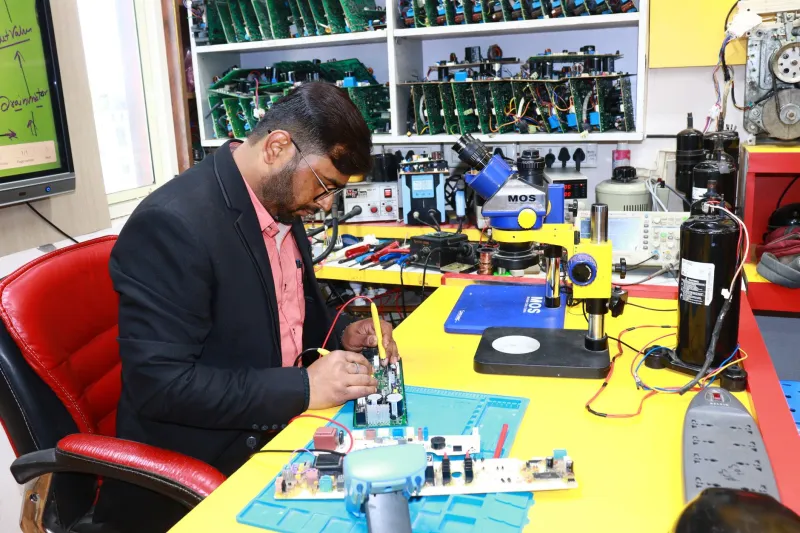
Visual and dimensional inspection remains underutilized. Genuine components from reputable manufacturers exhibit consistent marking fonts, termination finishes, and body dimensions. Counterfeit parts frequently show inconsistencies in marking depth, irregular termination plating, or body dimensions that fall outside published tolerances. A calibrated digital microscope and a set of reference samples from authenticated stock can catch a meaningful fraction of remarked components.
Supplier qualification and chain of custody documentation are process-level controls rather than technical ones, but they remain the most cost-effective defense. Purchasing from authorized distributors—Arrow, Avnet, Mouser, Digi-Key, and similar franchised channels—does not eliminate risk entirely but dramatically reduces exposure. When spot market purchasing is unavoidable, requiring certificates of conformance and traceability documentation, and cross-referencing date codes against manufacturer production records, adds a layer of accountability that many fraudulent suppliers cannot satisfy.
A Systemic Problem Requiring Systemic Attention
The passive component counterfeiting problem is unlikely to resolve itself. As long as the economics favor fraud and incoming inspection protocols remain oriented toward active components, the incentive to introduce substandard passives into the supply chain persists. The engineering community's tendency to treat passives as commodity items—interchangeable, unthreatening, beneath scrutiny—is a cultural vulnerability that the counterfeiting industry has learned to exploit with precision.
Addressing it requires a shift in how design and procurement teams think about component risk. The most expensive passive component in a failed product is not the one that costs the most to buy. It is the one that was cheapest to fake and easiest to miss. Building screening discipline around that reality, rather than around the assumption that simple components are safe components, is the first step toward a supply chain that is genuinely resilient.