Hidden Gold: How the E-Waste Revolution Is Turning Discarded Electronics Into Recoverable Treasure
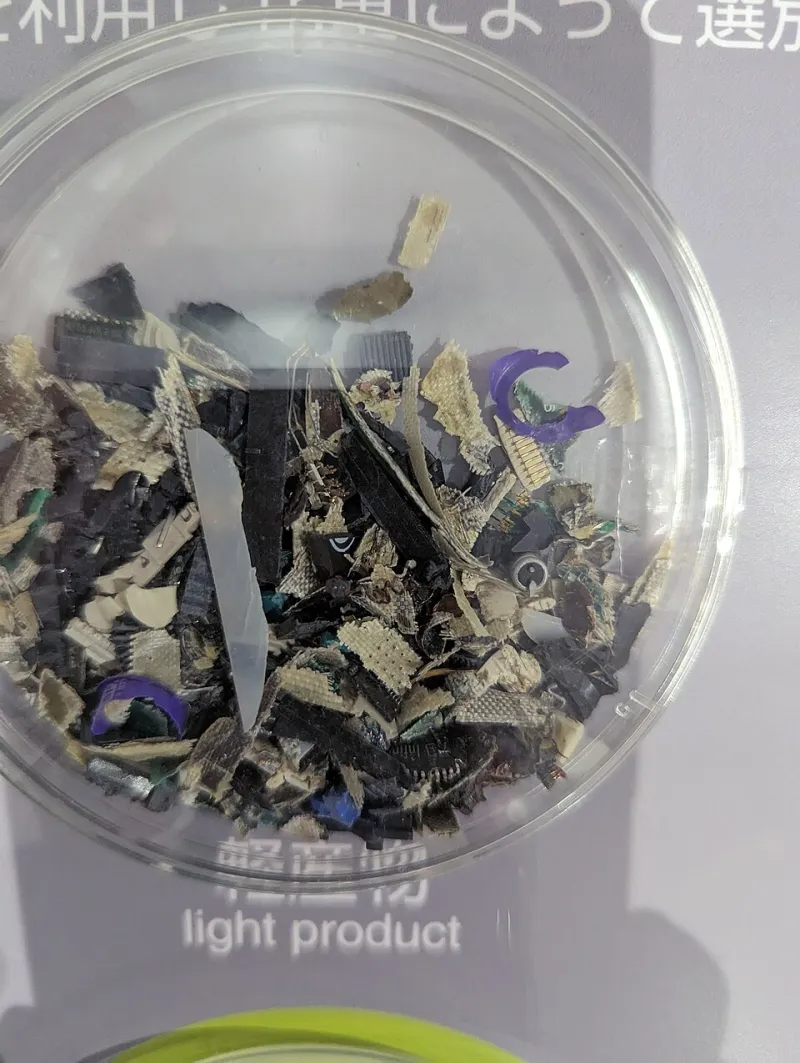
Photo: Syced, CC0, via Wikimedia Commons
Somewhere in the average American household, there are between five and ten electronic devices that no longer serve a purpose. A cracked tablet. A superseded smartphone. A drawer full of obsolete cables, retired routers, and laptops whose batteries gave out years ago. Most of these devices will eventually reach a landfill, despite containing materials of genuine economic and scientific value — and despite the existence of a growing infrastructure designed to recover them.
The United States generated approximately 6.9 million metric tons of electronic waste in a recent year, according to the Global E-waste Statistics Partnership. Of that total, less than 15 percent was formally documented as recycled. The remainder entered waste streams that either exported the problem overseas or buried it domestically. The environmental consequences are well documented. The economic consequences are less frequently discussed — and they are substantial.
What Is Actually Inside Your Old Devices
Understanding the material composition of consumer electronics transforms the way one thinks about discarded gear. A modern smartphone, for example, contains trace amounts of gold, silver, palladium, and copper — metals that, when aggregated across millions of devices, represent a recoverable resource of genuine commercial scale. The circuit boards inside laptops and desktop computers contain similar profiles, with additional quantities of tin used in solder alloys.
Beyond precious metals, consumer electronics are repositories of rare earth elements (REEs) — a category of 17 metalite elements that are essential to the magnets inside hard drives, the phosphors in display panels, and the vibration motors in mobile devices. The United States currently imports the vast majority of its rare earth supply, with China controlling a dominant share of global production. Domestic e-waste, viewed through this lens, represents a secondary supply chain for strategic materials — one that does not require a mine, a permit, or a geopolitical negotiation.
Lithium-ion batteries, now ubiquitous across consumer and industrial electronics, contain lithium, cobalt, nickel, and manganese — all materials subject to supply constraints and price volatility. Battery recycling, in particular, has attracted significant venture capital investment in recent years, with companies such as Redwood Materials (founded by former Tesla CTO JB Straubel) building industrial-scale operations in the American West specifically to recover and reintroduce these materials into domestic battery supply chains.
The Emerging Recovery Industry
The business of electronics recycling has evolved considerably from its origins in informal disassembly operations. Today, a spectrum of enterprises occupies the space between the neighborhood electronics drop-off event and the industrial hydrometallurgical processing facility.
At the commercial end, certified e-waste processors use a combination of mechanical shredding, eddy current separation, and chemical leaching processes to extract metals from circuit board assemblies at scale. The R2 (Responsible Recycling) and e-Stewards certifications, both recognized in the United States, provide a framework for auditing these operations against environmental and data security standards — a meaningful distinction in an industry that has historically struggled with accountability.
At the small-business level, a growing cohort of refurbishers and component harvesters occupies a different niche. Rather than processing devices for raw material recovery, these operators focus on extending the functional life of electronics through repair, remanufacturing, and selective component salvage. A working display panel recovered from a damaged laptop, for instance, retains far more economic value as a replacement part than as a source of indium and tin. This tiered approach to value recovery — repair first, refurbish second, recycle last — is increasingly recognized as the most resource-efficient model.
Practical Steps for Electronics Enthusiasts
For makers, hobbyists, and electronics professionals, the e-waste landscape offers both practical opportunities and clear responsibilities.
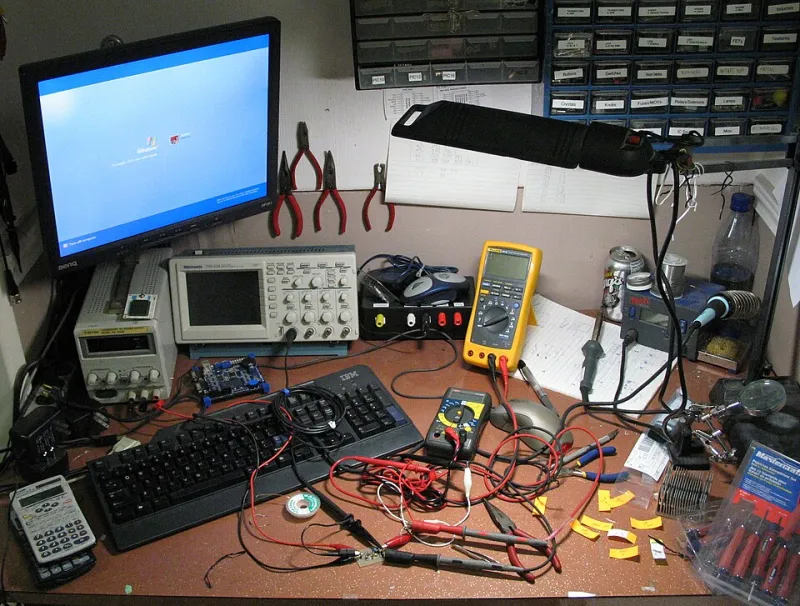
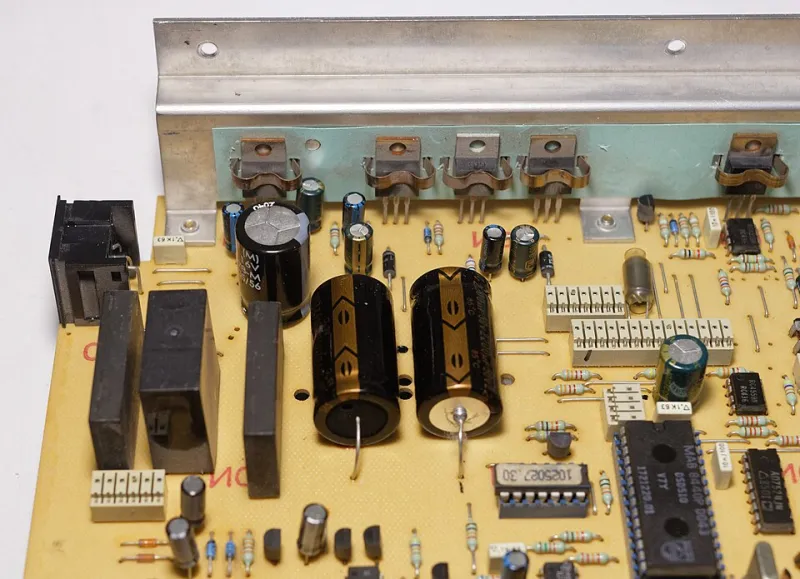
Component harvesting is an accessible entry point. Through-hole components — resistors, capacitors, inductors, and connectors — can often be desoldered from retired circuit boards and reintegrated into new projects. Older consumer electronics, particularly equipment manufactured before surface-mount technology became dominant, can yield useful passive components in quantity. A hot-air rework station and a quality desoldering pump are the primary tools required.
Battery assessment and repurposing represents a more advanced opportunity. Lithium-ion battery packs from power tools, laptops, and e-bikes frequently contain individual cells that retain significant capacity even when the pack as a whole has failed. Makers with appropriate safety knowledge — lithium cell handling carries genuine hazards that must be respected — have built functional energy storage systems, solar charge banks, and portable power supplies from salvaged cells. Organizations such as the Battery Hookup, a U.S.-based retailer, have built a business model around sourcing these packs and making them accessible to the DIY community.
Responsible disposal pathways are more accessible than many consumers realize. The EPA's eCycling program maintains a locator for certified recyclers by ZIP code. Major retailers including Best Buy operate in-store electronics recycling drop-offs that accept a broad range of consumer devices at no charge. Manufacturer take-back programs — offered by Apple, Dell, HP, and others — provide prepaid return options for branded equipment. For data-bearing devices, physical destruction of storage media prior to recycling is the most reliable method of ensuring data security.
The Policy and Education Dimension
The United States does not currently have a federal e-waste recycling law, leaving regulation to a patchwork of state-level extended producer responsibility (EPR) programs. Twenty-five states have enacted some form of electronics recycling legislation, with varying scope and enforcement mechanisms. Advocates in the electronics and environmental communities continue to press for federal harmonization — an outcome that would simplify compliance for manufacturers and expand recycling infrastructure in states that currently lack it.
For educators, e-waste offers a uniquely tangible context for teaching electronics concepts. Disassembling a retired smartphone in a classroom setting exposes students to real-world PCB design, component identification, and manufacturing techniques in ways that a textbook cannot replicate. Programs that incorporate responsible disassembly into electronics curricula serve the dual purpose of advancing technical literacy and cultivating environmental awareness in the next generation of engineers.
Closing the Loop
The electronics industry operates on a linear model that was designed for a world of abundant materials and low disposal costs. Neither condition holds today. Rare earth supply chains are fragile. Landfill capacity is finite. The environmental cost of primary material extraction is increasingly reflected in regulatory and reputational pressure on manufacturers.
The e-waste recycling movement is, at its core, an engineering challenge — one that requires innovation in chemistry, materials science, logistics, and product design to solve at the scale the problem demands. It is also a challenge in which individual actors, from the maker salvaging components in a garage workshop to the startup engineer designing a more recyclable PCB, can contribute meaningfully.
At Electron Labs, we see electronics recycling not as a peripheral concern but as an expression of the same ethos that drives good engineering practice: using resources deliberately, understanding systems deeply, and building things that last — or, when they no longer can, ensuring that what remains finds its way back into the cycle.